
Order Online
- Straight to your door!
Straight to your door


A sash lock is a specialised bit of hardware designed to clamp the two sliding sections of a traditional sash window together, holding them securely in place. It's more than just a simple latch; think of it as a powerful clamp that boosts both security and the window's overall performance.

It’s a common point of confusion, but a sash lock is a piece of ironmongery you'll find only on sash windows, not doors. Its main job is to secure the two vertically sliding sashes—the frames holding the glass—right where they meet in the middle on what's known as the meeting rails. This clever little component is a real staple in British period properties for a good reason.
Unlike a typical door lock that just focuses on stopping someone from getting in, a sash lock is doing two critical jobs at once. First, it adds a vital layer of security by preventing the window from being forced open from the outside. Second, its clamping action pulls the two sashes tightly together.
That second function is just as important as the first. By creating that snug fit, the lock gets rid of two of the most common headaches with older sash windows: annoying rattles caused by wind and unwelcome draughts that make a room chilly and waste energy. This makes it absolutely essential for both home security and comfort.
The real beauty of a sash lock lies in its simple yet incredibly effective design. It solves two completely different problems with one mechanism, making a contribution to a property that's far bigger than its small size might suggest. It’s an indispensable part of any sash window setup.
A well-fitted sash lock does more than just secure a window; it enhances the living environment by eliminating draughts and rattles, directly contributing to a warmer and quieter home.
To give you a clearer picture, here's a quick summary of what a sash lock does in action.
This table breaks down the main features and benefits of a standard sash lock.
| Feature | Primary Purpose | Benefit for Homeowners |
|---|---|---|
| Security Mechanism | To prevent the window's sliding sashes from being opened externally. | Provides a strong, primary locking point against potential intruders. |
| Clamping Action | To pull the two meeting rails of the sashes tightly together. | Seals gaps to stop cold draughts and reduce energy loss. |
| Sash Stabilisation | To hold the window sashes firmly in a fixed, rigid position. | Eliminates annoying rattles and vibrations caused by wind. |
Ultimately, understanding what a sash lock is means recognising its vital role in keeping traditional British homes secure, comfortable, and energy-efficient.
To really get a handle on what a sash lock is, you have to rewind the clock a few centuries. The story of the sash lock is completely tied up with the rise of its partner in crime: the iconic British sash window. These elegant, sliding windows became a signature of our architecture, and they brought with them the need for a lock that was just as specialised.
The whole thing kicked off in the late 17th century, a time of massive architectural change, especially after the Great Fire of London in 1666. New building regulations pushed for safer, more uniform designs, and the sash window, with its clean lines and clever engineering, shot to popularity. For its time, it was a seriously sophisticated bit of kit, relying on a system of weights and pulleys.
But this clever new window also created a brand-new security headache. A simple latch just wasn't going to cut it for these heavy, sliding sashes. This sparked the demand for a purpose-built fastener that could clamp the two meeting rails together, stopping anyone from simply prising them open from the outside.
Sash locks are the go-to security fitting for the UK's much-loved sash windows—those vertically sliding beauties that define so much of our architectural heritage. Back around 1669, Sir Christopher Wren's master joiner, Thomas Kinward, is credited with documenting the first counterbalanced sash window at Whitehall Palace. These windows needed strong sash locks to keep them secure, and today, they grace over 80% of period homes built between 1700 and 1900, with an incredible 75% still retaining their original frames. You can explore more about the history of sash windows in the UK to see how this innovation spread like wildfire.
This boom was turbocharged by a key economic shift: the repeal of the infamous glass tax in 1845. Suddenly, larger panes of glass became much more affordable, meaning sash windows were no longer just for the grand homes of the wealthy.
The end of the glass tax basically democratised the sash window. It became a standard feature in the thousands of Victorian and Edwardian terraced houses that still shape our towns and cities today.
This bit of history is genuinely important for today's tradespeople, property managers, and DIYers. When you're working on a Georgian, Victorian, or Edwardian property, choosing the right ironmongery isn't just about function; it's about preserving the building's soul. A modern, out-of-place fastener can really spoil the character and even knock value off a period property.
Using historically appropriate sash locks ensures any restoration or repair work is sympathetic to the building's original design. It's about respecting the craftsmanship of the past while getting the security and performance we need today. It just goes to show how a small piece of hardware can carry a whole lot of history.
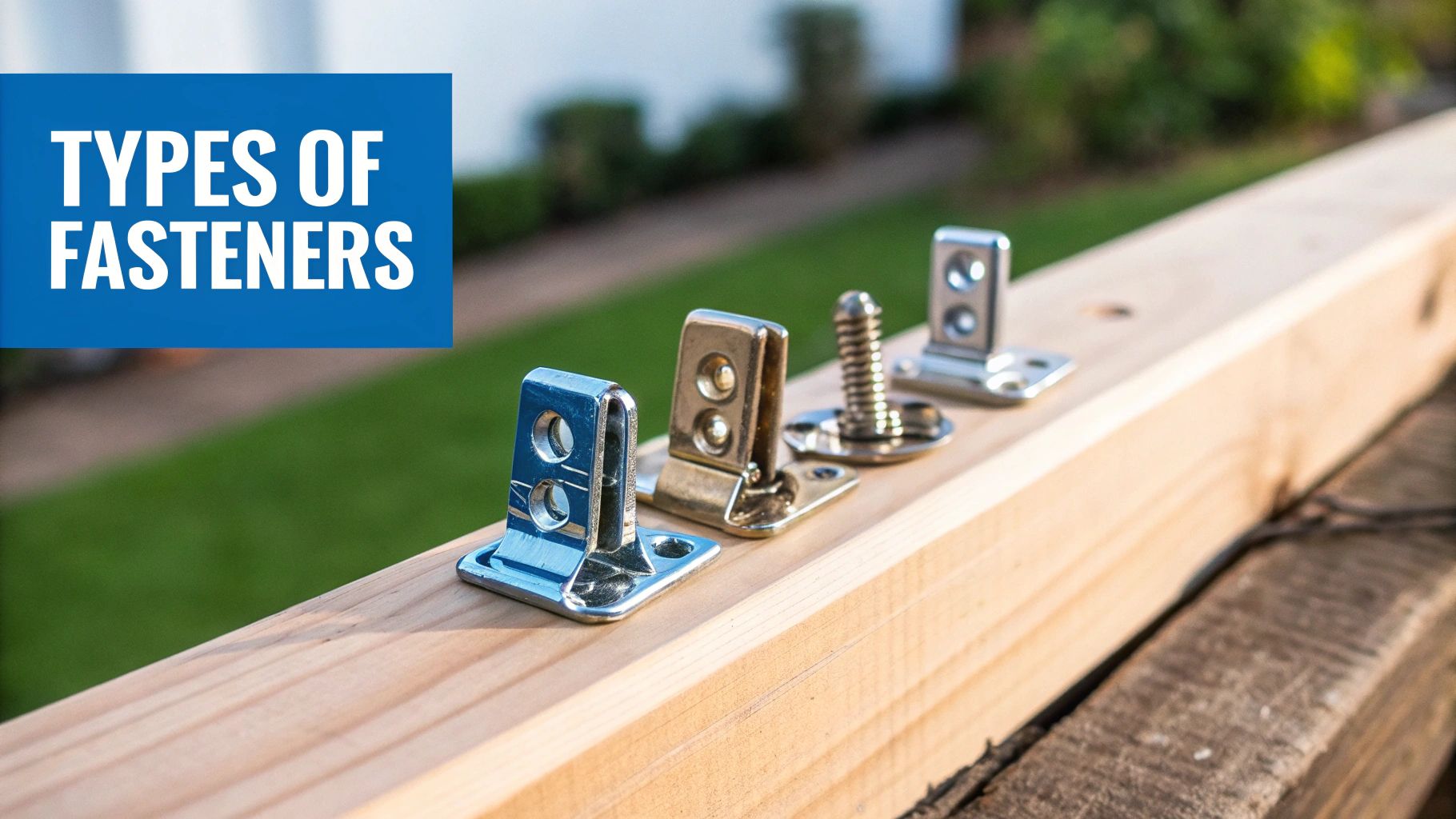
When people talk about sash locks in the context of windows, they're talking about the fastener that holds the two meeting rails together. It’s a beautifully simple system. At its heart, every sash lock has two main bits: the arm (sometimes called a cam or lever) and the keep (or receiver plate). The arm sits on the meeting rail of the bottom sash, while the keep is fixed to the top one.
You just rotate the arm, and it sweeps over to slot snugly into the keep. This action clamps the two rails together, pulling them into a tight, secure alignment. Not only does this stop the sashes from sliding past each other, but it also does a great job of sealing up any draughty gaps. While the idea is straightforward, there are a few different designs out there, each with its own twist.
It's worth pointing out that the word "sashlock" can also mean a type of mortice lock for doors, which has both a latch and a deadbolt. But for windows, it’s all about these clever fasteners. If you're curious, you can see how different they are by checking out these 3-lever mortice sashlocks for doors.
The fitch fastener is the one you’ll see most often across the UK. It’s the classic sash window lock that probably springs to mind first. It’s made up of a simple rotating arm on one plate and a curved keep on the other.
If you're after something a bit more robust, the Brighton fastener is a fantastic step up. This design adds an extra layer of security and creates a much stronger, more positive lock between the sashes.
Instead of a simple swinging arm, a Brighton fastener features a threaded bolt on one plate and a separate locking nut or arm on the other. You swing the arm over, drop it into the keep, and then screw it down tight. This threaded action pulls the sashes together with much more force than a fitch fastener, creating a far more secure seal.
The real advantage of a Brighton fastener is its powerful clamping action. By screwing the two parts together, it provides superior compression that’s brilliant for shutting down stubborn draughts and boosting security.
Another popular option is the claw fastener. As you might guess from the name, this lock has a rotating arm with a claw-like hook on the end. This claw latches onto a specially shaped keep, giving you a really firm grip.
The main benefit here is how resistant it is to being prised open. The way the claw and keep interlock makes it much harder for an intruder to force the sashes apart. It’s often the go-to choice for ground-floor windows or anywhere that security is a top priority.
Choosing the right fastener can make a big difference to your window's performance and security. To help you pick the best one for the job, here’s a quick rundown of how the main types stack up against each other.
| Lock Type | Mechanism | Best Suited For | Security Level |
|---|---|---|---|
| Fitch Fastener | A simple rotating arm that swings over a keep. | General use on most standard sash windows. | Standard |
| Brighton Fastener | A hinged, threaded bolt tightened by a nut. | Windows requiring extra compression and security. | High |
| Claw Fastener | A rotating arm with a hook that grips the keep. | High-security applications, especially on ground floors. | High |
Whether you need a simple, classic look or a high-security solution, there’s a sash lock designed to meet your needs.
Choosing the right sash lock is about more than just picking a mechanism. To get it right, you need to think about aesthetics, materials, sizing, and security. Getting these details spot on is crucial for a secure fit and a finish that looks right at home, especially in a period property.
Nailing these choices ensures the lock not only works perfectly but also complements the window's character, whether you're restoring an original feature or giving an old one a new lease of life. Let's break down what you need to consider.
The material and finish of your sash lock can make or break the look of a room. For period properties, matching the ironmongery to the building's era is key to keeping its authentic charm.
Picking a finish that ties in with other hardware in the room—like door handles and light fittings—is a pro move that creates a really cohesive interior.
This is probably the most critical part of the job. You need to make sure the sash lock is the right size for your window. A lock that’s too small won’t be secure, while one that’s too big will overhang the meeting rails and just look clumsy.
Before you buy anything, you must measure the width of the meeting rails. The base plates of both the arm and the keep need to sit comfortably on the timber, without spilling over the edges. And proper alignment is non-negotiable. If the rails don't meet flush, the lock won't engage properly, which messes with both security and your draught-proofing.
A correctly sized and aligned sash lock guarantees a snug, secure fit. This simple measurement prevents a world of frustration, ensuring the clamping action is effective and the window is properly sealed against the elements.
Finally, think about how much security you actually need. For most upper-floor windows, a standard fitch or claw fastener will do the job just fine. But for ground-floor windows, or in any property where security is a top priority, it's smart to upgrade.
A key-locking sash fastener adds another layer of protection. It works just like a standard lock but has a key-operated deadbolt that stops the arm from turning. This is a game-changer for landlords and anyone serious about security, as it stops an intruder from simply smashing the glass and flipping the latch from the inside. This idea of layered security is similar to how different door locks work; you can learn more about how a Euro cylinder lock works to see just how versatile locking mechanisms can be.
Fitting a new sash lock or replacing an old one is a satisfying job that boosts both a room's security and comfort. With the right approach, it’s a pretty straightforward task for any competent DIYer or tradesperson. This guide breaks down how to fit a standard fitch-style fastener and covers the essential maintenance to keep it working perfectly for years.
Before you even think about picking up a drill, here's a pro tip that will save you a world of headaches: make sure the window sashes are perfectly aligned. Close the window and check that the meeting rails are level and sit flush. If they're out of whack, the lock will never engage properly, so you'll need to sort out any underlying window issues first.
Once your sashes line up nicely, you can get started. We'll use a fitch fastener as our example since it's the most common type you'll come across.
Give the lock a few test runs. The arm should rotate smoothly and click securely into the keep. That clamping action should pull the sashes tightly together without a struggle. It's a very different process from fitting door hardware; if you're curious about that, you can learn more about how to fit a mortice lock to see the contrast.
This simple guide helps break down the key decisions to make before you start, covering the essentials: style, size, and security.
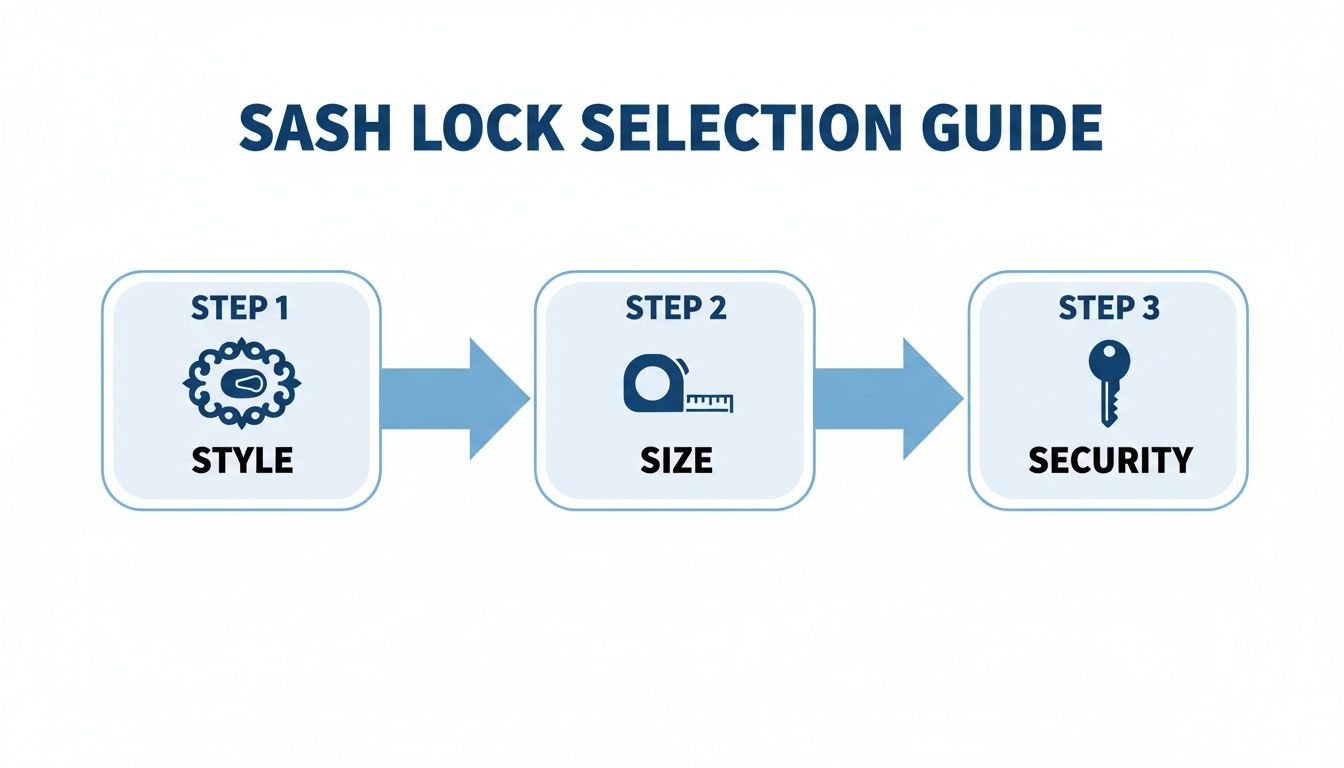
As you can see, a successful installation really begins with choosing a lock that not only looks right but is also correctly sized for your meeting rails and offers the security you need for that window's location.
Even the best-fitted sash lock can run into issues over time. Here’s a quick guide to tackling the usual suspects, keeping your windows secure and functional for years to come.
Regular maintenance is your best friend here. A quick check-up on your sash locks every six months can stop small annoyances from becoming big problems, ensuring they provide reliable security and draught-proofing all year round.
Problem: The Lock is Stiff or Hard to Turn
Problem: The Lock Feels Loose
Problem: The Arm and Keep No Longer Align
Sash locks have come a long way. While they have a rich history, their job today is more crucial than ever, striking a fine balance between modern security demands and the delicate needs of building conservation. The classic fitch fastener isn't just a simple latch anymore; manufacturers have beefed up these traditional designs with features like key-locking mechanisms for some real peace of mind.
This evolution is a direct answer to the security headaches that come with period properties. It’s no secret that older windows can be a weak spot, and the stats back it up. In urban areas across the UK between 2020-2025, sash windows without modern, compliant locks saw 35% higher forced-entry attempts. On the flip side, upgrading pays off. For landlords, properties with compliant locks can command up to 15% higher rents.
These days, choosing the right sash lock isn't just about looks—it’s a decision that has real consequences for insurance policies and building regulations. Many insurers now insist that ground-floor or easily accessible windows must have key-operated locks. Slap on a standard, non-locking fastener, and you might find your theft claim invalidated.
For those working on listed buildings or in conservation areas, it's a double-edged sword. You need to boost security without compromising the property's authentic character. This means finding high-quality sash locks that tick all the boxes:
For a broader look at protecting windows, these comprehensive security tips for windows are well worth a read.
At the end of the day, a high-quality sash lock is a smart investment in the property's overall health and value. It’s a small piece of kit that delivers a big impact on three fronts: security, energy efficiency, and heritage preservation.
A modern, well-fitted sash lock pulls the sashes together tightly, which can seriously cut down on draughts. In older homes, this can account for up to 15% of heat loss. That means better energy efficiency, lower heating bills, and a more comfortable home.
For landlords, property managers, and homeowners alike, picking the right sash lock is a practical move that secures the building, keeps the insurers happy, and respects its architectural history. It just goes to show that even the smallest details play a massive part in keeping a home safe and valuable.
To wrap things up, we've pulled together some of the most common questions we get from both seasoned pros and weekend DIYers. Here are some straightforward answers to help you nail your next sash lock project.
Absolutely. Swapping an old, tired sash lock for a new one on an original window is a really common and worthwhile upgrade.
The trick is to pick a lock that not only looks right for the window's age but is also the correct size for the meeting rails. You might need to fill in the old screw holes with a bit of wood filler first. Most importantly, give the sashes a once-over to make sure they're in decent nick and line up properly before you start—this guarantees a secure, snug fit once the new lock is on.
Yes, without a doubt. A key-operated sash lock is a significant step up in security. A standard fastener is designed purely to stop the sashes from sliding past each other, but a determined intruder could just break the glass and flip the latch open.
A key-operated lock shuts down that weak spot completely. Since it can't be unlocked from the inside without the key, it's the go-to choice for ground-floor windows or any property where security is a top priority. In fact, many insurance companies now insist on them for external windows as part of their policy requirements.
By adding a key-locking mechanism, you move from a simple deterrent to a robust security feature that actively thwarts common break-in methods, providing genuine peace of mind.
Nine times out of ten, the problem is that the window sashes are out of alignment. Timber windows can swell, shrink, or shift over time with changes in humidity, and it doesn't take much to throw things off.
First, check that the top and bottom sashes are fully closed and that their meeting rails are perfectly level. If they're even slightly off, the lock's arm won't slot into the keep correctly. The issue could also be simpler—the keep or the lock itself might have worked loose over time. Check all the fixing screws and give them a tighten if needed. In some cases, an old lock is just plain worn out and ready for replacement.
Landlords and property owners often have wider questions beyond just locks, which are covered in these general property management FAQs.
For all your ironmongery needs, from traditional sash fasteners to high-security door hardware, trust the experts at Neasden Hardware. With over thirty years of experience, we provide high-quality products with fast, nationwide delivery. Explore our full range at https://neasdenhardware.co.uk.