
Order Online
- Straight to your door!
Straight to your door


You're halfway through a kitchen refit, the doors are ready to hang, and the hinge decision has suddenly become less simple than choosing a handle. A bright polished brass hinge may be exactly what a period cabinet needs, but it can look conspicuous on a clean, handleless run of contemporary doors. Choose the wrong size or screw arrangement, and even an attractive hinge can leave you with sagging doors, loose fixings, or an expensive return visit.
For British cabinetry, brass cabinet hinges sit at the point where appearance, material choice and mechanical performance meet. The right specification depends on whether the hinge should be seen, how the finish will age, the door's actual load, and the relationship between hinge geometry and fixing size. This guide applies those decisions to kitchens, bathrooms, fitted furniture, restoration work and bespoke joinery across the UK.
A carpenter replacing hinges on an older painted cupboard usually has two jobs. The door must hang squarely, and the new hardware must look as though it belongs there. A bright plated hinge may function perfectly, yet still feel wrong against timber, traditional paint colours or period joinery. Solid brass has remained popular because it performs as a working fitting while bringing warmth and visual weight to the furniture.
Brass hardware for furniture and cabinets appeared in early seventeenth-century England, first on lacquered furniture imported from the Orient. Britain didn't produce it in large numbers until the third quarter of the seventeenth century, and domestic production became more dependable after the 1737 discovery of the English process for extracting pure zinc from calamine and sphalerite, which improved brass manufacture and supply for hinges and other fittings. The historical development is documented in this account of early furniture brasses and brass production.
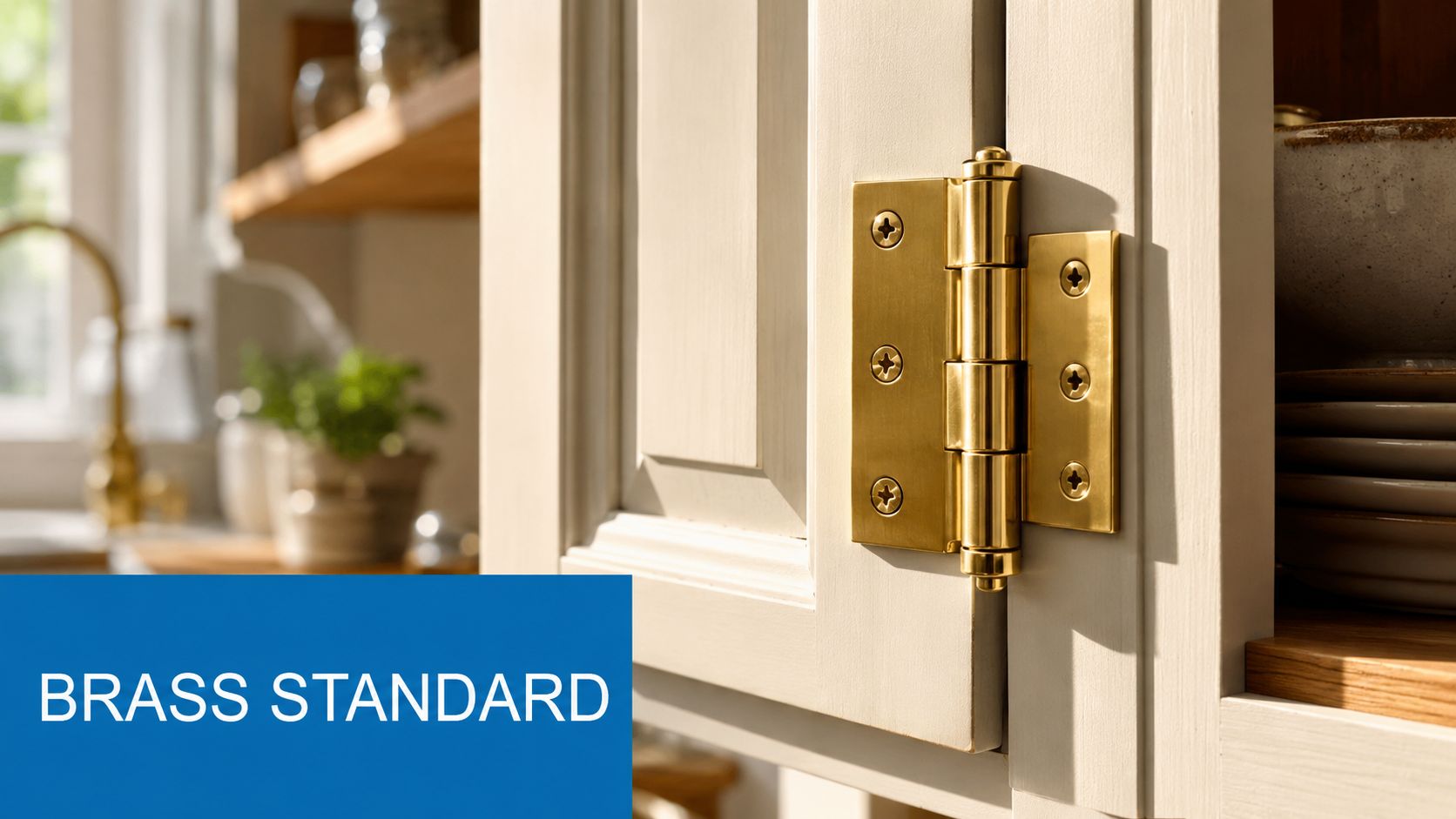
Brass is machinable, stable in ordinary interior conditions and naturally resistant to corrosion compared with many less suitable ferrous alternatives. That matters on cupboard doors opened repeatedly, particularly where a hinge is exposed to kitchen vapour, hand contact and occasional cleaning. It also accepts a broad range of surface treatments, from reflective polished brass to subdued satin, aged and antique finishes.
The material isn't automatically a guarantee of quality. A poorly sized brass hinge can fail through movement at the screws or excessive load on the knuckle, while a well-specified hinge made from another material may be perfectly adequate for a particular application. The practical advantage of brass is that it combines a useful working material with a finish that suits both traditional and contemporary interiors.
Practical rule: Specify the hinge for the door and its use first, then choose the brass finish. Reversing that order creates attractive but unreliable installations.
The British manufacturing tradition is still visible in established firms. Cooke Brothers was founded in 1872 in Birmingham's Jewellery Quarter to manufacture brass cabinet fittings, and the company says it has operated for nearly 150 years while remaining based in the West Midlands. Its history illustrates that brass cabinet hardware became part of Britain's enduring industrial metalworking tradition, rather than a short-lived decorative fashion. See the Cooke Brothers history of brass cabinet fittings.
The hinge type changes both the appearance of the cabinet and the work required to fit it. A traditional butt hinge needs careful mortising or surface positioning, whereas a concealed hinge demands accurate boring and a compatible mounting plate. Decide how the door sits in relation to the carcase before ordering hardware.
| Hinge Type | Best For | Visibility | Adjustment | Typical Use |
|---|---|---|---|---|
| Butt hinge | Period furniture and light cabinet doors | Visible when closed | Limited after fitting | Freestanding cupboards, restoration and bespoke joinery |
| Concealed hinge | Minimalist kitchens and modern fitted furniture | Hidden when closed | Usually broad adjustment through the mechanism | Contemporary kitchens, wardrobes and bathroom units |
| Overlay hinge | Doors covering the carcase front | Usually concealed | Adjustable, depending on model | Standard kitchen and utility cabinetry |
| Inset hinge | Doors sitting within the cabinet opening | Often concealed, with visible alternatives available | Adjustable on concealed versions | Shaker cabinetry, furniture and flush fitted doors |
A brass butt hinge is the natural choice when the fitting should contribute to the design. It works particularly well on a period cupboard, a glazed door or a small furniture door where a visible knuckle adds an authentic detail. The leaves may be recessed into the door and frame for a flush result, or surface-mounted where the style and construction allow it.
The limitation is adjustment. Once the hinge is mortised and screwed, correcting a door that sits out of square may require packing, careful re-cutting or repositioning. Pilot holes must be accurate, and the screws need enough purchase in sound timber.
Concealed hinges disappear when the door is shut, making them the sensible option for handleless kitchens, modern wardrobes and crisp fitted furniture. They normally require a hinge cup boring and a mounting plate, so the cabinetmaker must follow the manufacturer's drilling pattern rather than assume that one concealed hinge fits another.
For compact washrooms, the same visual logic applies to space-saving Dublin bathroom cabinets, where concealed hardware can preserve a narrow, uncluttered elevation. Brass may still be present in the mechanism, but it doesn't have to become a visible feature.
An overlay hinge allows the door to sit over part or all of the cabinet front. An inset hinge places the door inside the opening, so the gaps and alignment become much more exposed. Overlay installations can be forgiving visually, but inset doors demand accurate carcass construction and consistent reveals.
Before drilling, confirm the door position, hinge cup pattern, mounting plate height and screw locations. A useful overview of cabinet door hinge types can help when comparing mechanisms, but the final choice should follow the actual door construction and design intent.
Finish selection is a maintenance decision, not just a colour decision. Polished brass gives a reflective, traditional appearance and makes the hinge deliberately visible. It can suit a painted kitchen or formal furniture, but it also reveals fingerprints and small marks more readily than softer brushed surfaces.
Satin brass reduces glare and usually sits more subtly on a modern door. Its brushed appearance is practical in busy kitchens because contact marks are less prominent. Antique brass and aged brass bring darker variation and work naturally with period furniture, stained timber and heritage paint schemes.
Unlacquered brass is a living finish. It reacts gradually with air, moisture and handling, developing a patina rather than retaining one fixed colour. That changing surface suits a restoration where new hardware should settle into the furniture, or a kitchen where natural ageing is part of the design.
Lacquered polished brass is the opposite choice. The coating helps preserve the original appearance and reduces the need for polishing, but abrasive cleaning or damaged lacquer can leave an uneven surface. Don't polish a lacquered hinge aggressively. You may remove the coating and create a patch that looks worse than the original mark.
Finish choice should follow the household: a landlord may prefer a consistent, low-intervention surface, while an owner of a period kitchen may welcome the variation of unlacquered brass.
Brass performs well in normal kitchen and bathroom conditions, including humid interiors, although no finish is maintenance-free. Wipe away standing moisture, salt residue and cleaning product deposits rather than allowing them to remain around the knuckle or screw heads. Coastal properties deserve particular care because airborne salt can accelerate surface marking on exposed metal.
For a family kitchen, satin or brushed brass is often the practical compromise between warmth and easy upkeep. In a rental property, lacquered brass can help retain a consistent appearance, provided occupants use non-abrasive cleaning methods. For a heritage restoration, antique, aged or unlacquered brass generally looks more convincing than a highly reflective modern coating.
Recent UK-facing trend coverage describes renewed interest in antique brass, satin brass, unlacquered brass and naturally aged finishes, while also noting that concealed hardware remains desirable in higher-end residential and hospitality interiors. The 2026 UK hardware trend discussion is useful context, but the site conditions and cleaning routine should decide the final specification.
A hinge described only as “small brass” tells you almost nothing about whether it will carry a particular door. The relevant details include leaf length and width, material thickness, knuckle diameter, screw size and tested or stated load capacity. Door height, construction and the position of the hinge also affect how the load behaves in service.
UK product specifications show why generic sizing is risky. One solid brass butt hinge is listed at 75.0 mm by 42.0 mm, with 2.0 mm material thickness, a 6.0 mm knuckle diameter, 8.0 x 25.4 mm screws and a 10.0 kg load capacity. Its available finishes include Aged Brass (UK 501) and Antique Brass (UK 502). Those details appear in the HIB301C brass hinge specification.
A smaller hinge can still carry a substantial stated load when its geometry and fixing arrangement are suitable. Another UK specification lists a hinge measuring 50.8 mm by 38.0 mm, with 2.3 mm thickness, a 6.0 mm knuckle diameter, 6.0 x 19.05 mm screws and a 10.0 kg maximum load. Review the HIB299F cabinet hinge specification before treating small dimensions as an automatic sign of low capacity.
| Hinge Size (mm) | Thickness (mm) | Knuckle Diameter (mm) | Screw Size | Max Load (kg) |
|---|---|---|---|---|
| 50.8 x 38.0 | 2.3 | 6.0 | 6.0 x 19.05 mm | 10.0 |
| 75.0 x 42.0 | 2.0 | 6.0 | 8.0 x 25.4 mm | 10.0 |
These figures are product-specific. They aren't a universal loading table for every brass hinge on the market.
Independent UK listings include dimensions such as 38 x 22 x 1.3 mm, 50 x 28 x 1.5 mm, 64 x 35 x 2 mm and 75 x 41 x 2 mm. The UK brass hinge dimension specification supports using precise measurements when matching replacement hardware, especially where existing mortises or screw holes must be retained.
Trade guidance commonly bases weight recommendations on three hinges per door. It lists 50.8 x 38 mm and 63.5 x 38 mm hinges at a 10 kg maximum load, while a larger 75 x 50.8 mm hinge is rated to 20 kg. Check the supplier's brass butt hinge size and load guidance, then allow for the door's real construction, not just the timber face.
Screw gauge and length matter because the hinge can be only as secure as the material holding it. The listed specifications pair the larger hinge with 8.0 x 25.4 mm screws and the smaller example with 6.0 x 19.05 mm screws. Don't substitute a shorter screw because it is easier to drive, and don't use a fixing so long that it risks breaking through a thin door or frame.
For a reliable selection:
BS EN 15570:2008 specifies strength and durability testing for hinges pivoting on a vertical axis. Its defined loads, forces, velocities and cycle testing simulate normal use and misuse, and, except for corrosion testing in Clause 6.4, the results are independent of material and manufacturing process. The BS EN 15570:2008 standard record reinforces the point: select by verified performance, not by the word “brass” alone.
A cabinet in a Victorian house may need its hardware to look as though it belongs there, while a handleless kitchen usually depends on an uninterrupted door face. Visible brass cabinet hinges and concealed hinges therefore serve different design purposes. The right choice follows the room's architecture, door construction and the amount of metal the scheme is meant to show.
In Victorian or Edwardian refurbishment, an exposed butt hinge can form part of the furniture language. Match the hinge knuckle, finish and scale to existing period escutcheons, knobs and catches, particularly in conservation work. Surviving hardware also reveals the original proportions and patina. A bright polished replacement beside aged fittings can look newly installed rather than restored, even when the hinge geometry is suitable.
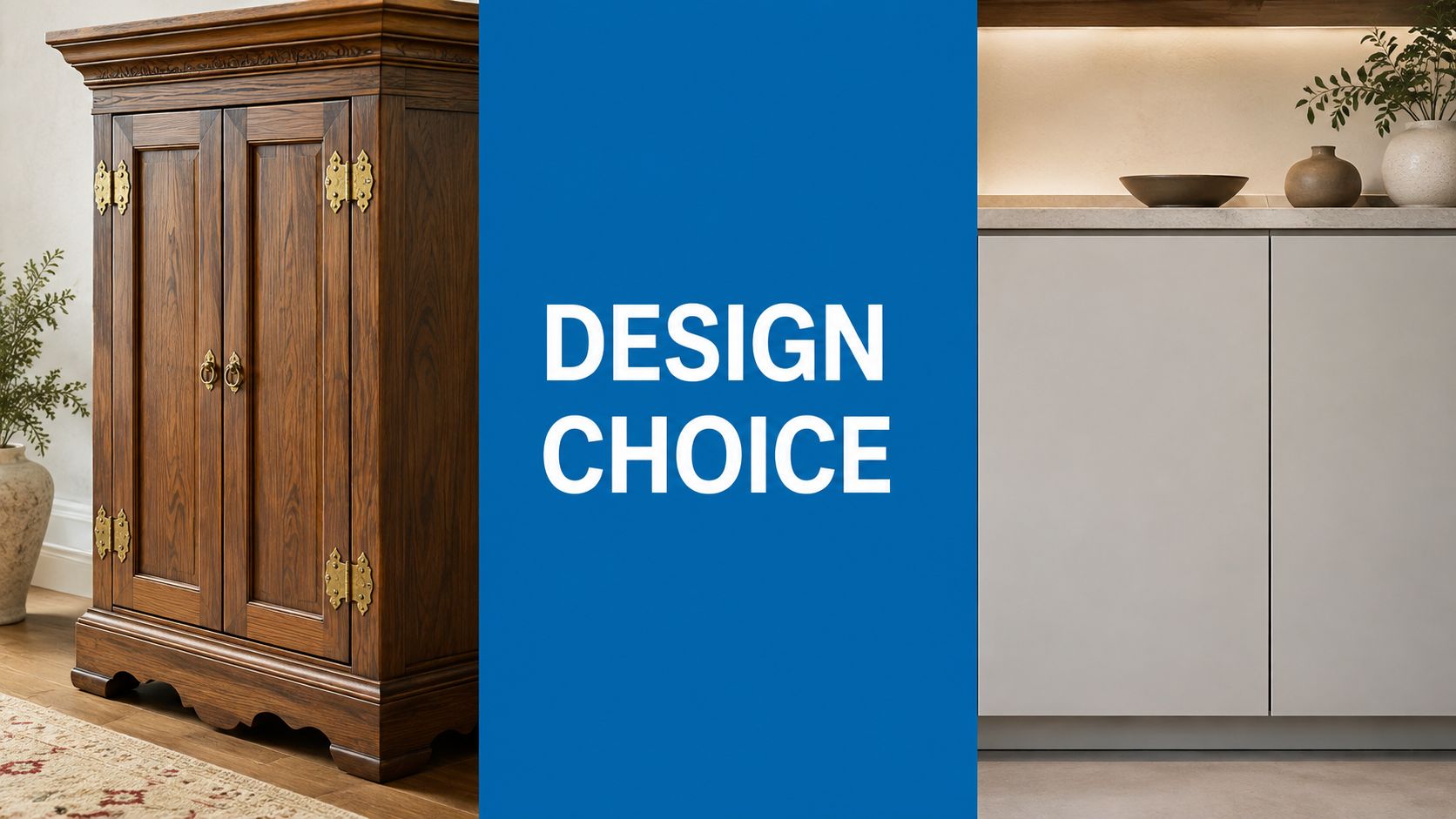
A Shaker kitchen can take visible brass, provided the hinge scale suits the door and the finish appears elsewhere in the room. Repeat its tone through selected knobs, pulls or other ironmongery rather than leaving isolated flashes of metal. Satin or aged brass generally sits more subtly against painted timber, while polished brass draws attention to the hinge line.
Concealed hinges usually suit minimalist runs because the door plane stays visually clear. Brass can still appear through handles, edge pulls or lighting, allowing warmth without making the hinge part of the composition. Where a scheme mixes heritage finishes with handleless runs, decide which metal elements remain visible before ordering hardware. This prevents a visible hinge from competing with the handles or becoming an accidental focal point.
The hinge must also suit the door's proportions. A small traditional hinge may look appropriate on a framed cupboard but under-scaled on a broad, heavy door. Conversely, an oversized knuckle can dominate a delicate period door. Check the hinge geometry, leaf width and screw positions against the available timber, then confirm that the selected fixing arrangement matches the door load rather than choosing by finish alone.
A visible hinge is a design line. Align it, repeat it and give it enough visual importance to look intentional.
For practical ideas on coordinating hinges with handles, knobs and related details, see this guide to upgrading cabinets with finishing touches. In fitted work, the strongest result comes from deciding visibility, finish and proportions together, before the hardware is ordered.
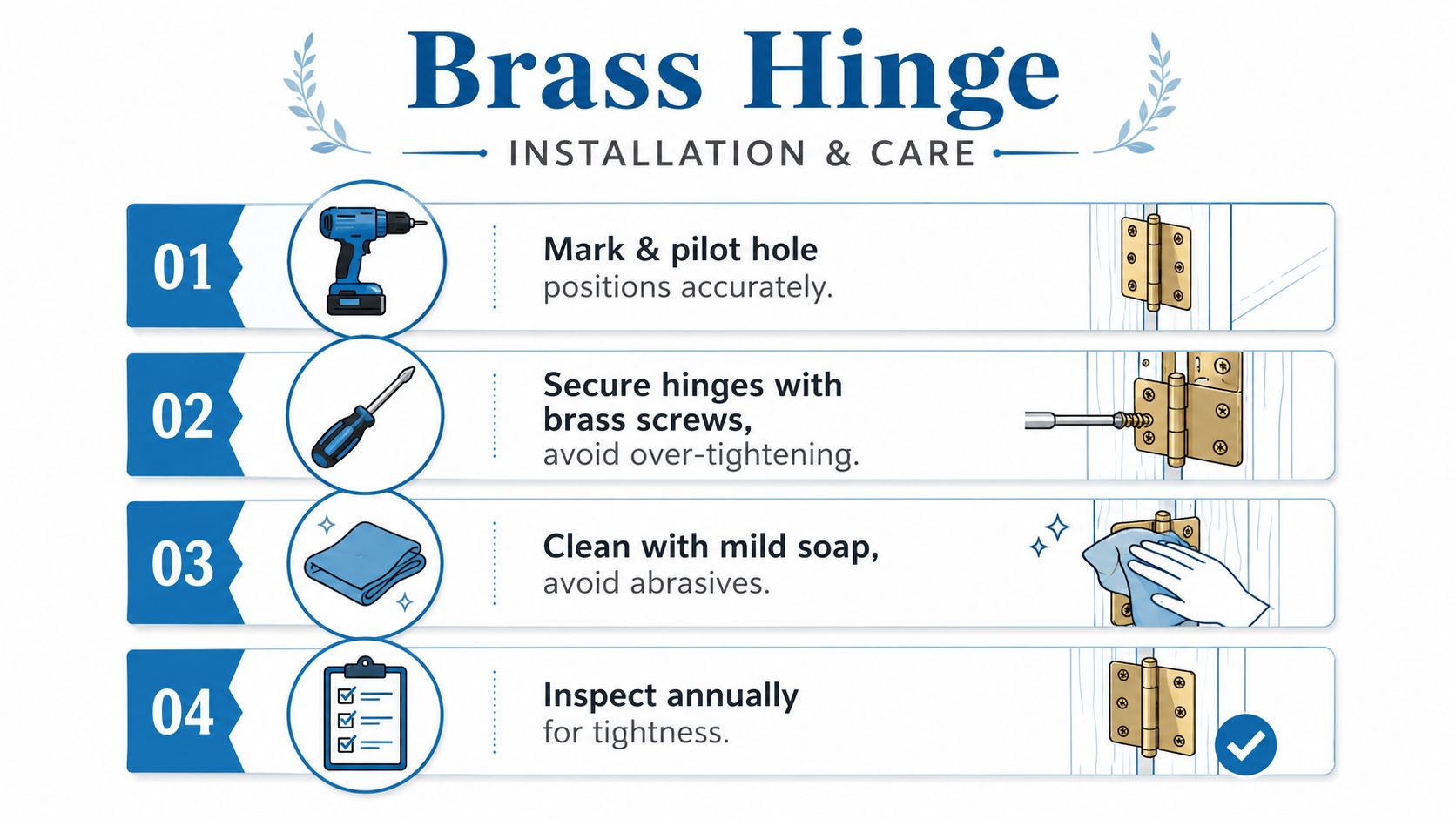
Good hinge fitting starts before the drill touches the cabinet. Place the door on a protected bench, mark the hinge positions from a consistent reference edge and check that the door is not twisted. On a butt hinge, use a sharp chisel or router to create a clean recess where the hinge leaf must sit flush. On a concealed hinge, use the specified cup diameter, depth and setback rather than copying an old hole without checking the replacement mechanism.
Pilot holes are essential in hardwood, painted timber and narrow door rails. They reduce the risk of splitting and help the screws enter straight. Use the supplied or specified screw dimensions, drive them firmly without crushing the hinge leaf, and stop when the head is seated. Over-tightening can distort the leaf or strip the timber around the thread.
A practical installation sequence is:
A squeak often comes from friction, dirt or a hinge leaf under stress. Check that the screws are tight and that the door isn't forcing the knuckle out of line. Apply a small amount of suitable light lubricant to the pivot, then wipe away excess so it doesn't collect dust.
Use a soft cloth and mild soapy water for routine cleaning. Avoid abrasive pads, harsh metal polish and aggressive rubbing on lacquered brass. Unlacquered brass can be polished if you want to restore brightness, or wiped and left to develop its patina. That choice should be consistent across a run of cabinets, because isolated polishing creates uneven colour.
For replacement work, The Cabinet Coach hinge guide offers useful background on identifying and changing cabinet hinges. A detailed cabinet hinge installation guide can also help with the practical sequence.
The embedded video below provides a visual reference for hinge replacement and fitting:
Replace a hinge when the knuckle is worn, the leaves are distorted, the screw holes no longer hold, or the door continues to drop after proper alignment. Repair is sensible when the problem is a loose screw or minor adjustment. If the substrate has failed, fit a larger or more suitable fixing only after confirming that the hinge and door construction can accept it.
A credible product description should tell you more than the colour. Look for solid drawn brass, brass pins, accurate dimensions, screw details and a stated application such as cupboard or light-door use. UK listings commonly describe solid drawn brass with brass pins, a construction that reduces galvanic mismatch within the hinge assembly. That doesn't make every hinge suitable for a heavy door, so treat the application and load information as equally important.
Ask the supplier for a technical sheet where the product page is vague. Compare the leaf dimensions, thickness, knuckle diameter, fixing pattern and load rating against your door. The BS EN 15570:2008 testing framework is particularly useful because it focuses on strength and durability performance rather than allowing the material label to do all the selling.
A broader cabinet hardware selection guide from Trademaster Construction is helpful when you're comparing hinge styles with handles and other fittings. For UK projects, also check that the finish, screw format and replacement availability suit the installation.
Neasden Hardware's cabinet hardware range includes hinges, knobs, handles and accessories in finishes including antique brass, with separate cabinet hinge and concealed hinge collections for kitchen cupboards, bathroom cabinets, wardrobes and custom joinery. That makes it possible to compare visible and concealed solutions within the same broader hardware specification, rather than choosing a hinge in isolation.
Visit Neasden Hardware to compare brass cabinet hinges, concealed hinges and coordinating cabinet hardware for your next UK project. Use the product dimensions and load information to choose a fitting that looks right on the door and remains dependable in daily use.