
Order Online
- Straight to your door!
Straight to your door


Choosing the right paint for kitchen areas is a big deal. Your standard emulsion just isn't cut out for the unique challenges a kitchen throws at it—we’re talking steam, grease, and daily scuffs. A specialised, durable kitchen paint gives you far superior resistance to moisture and stains, making sure your walls and cabinets stay looking fresh and are a breeze to clean.
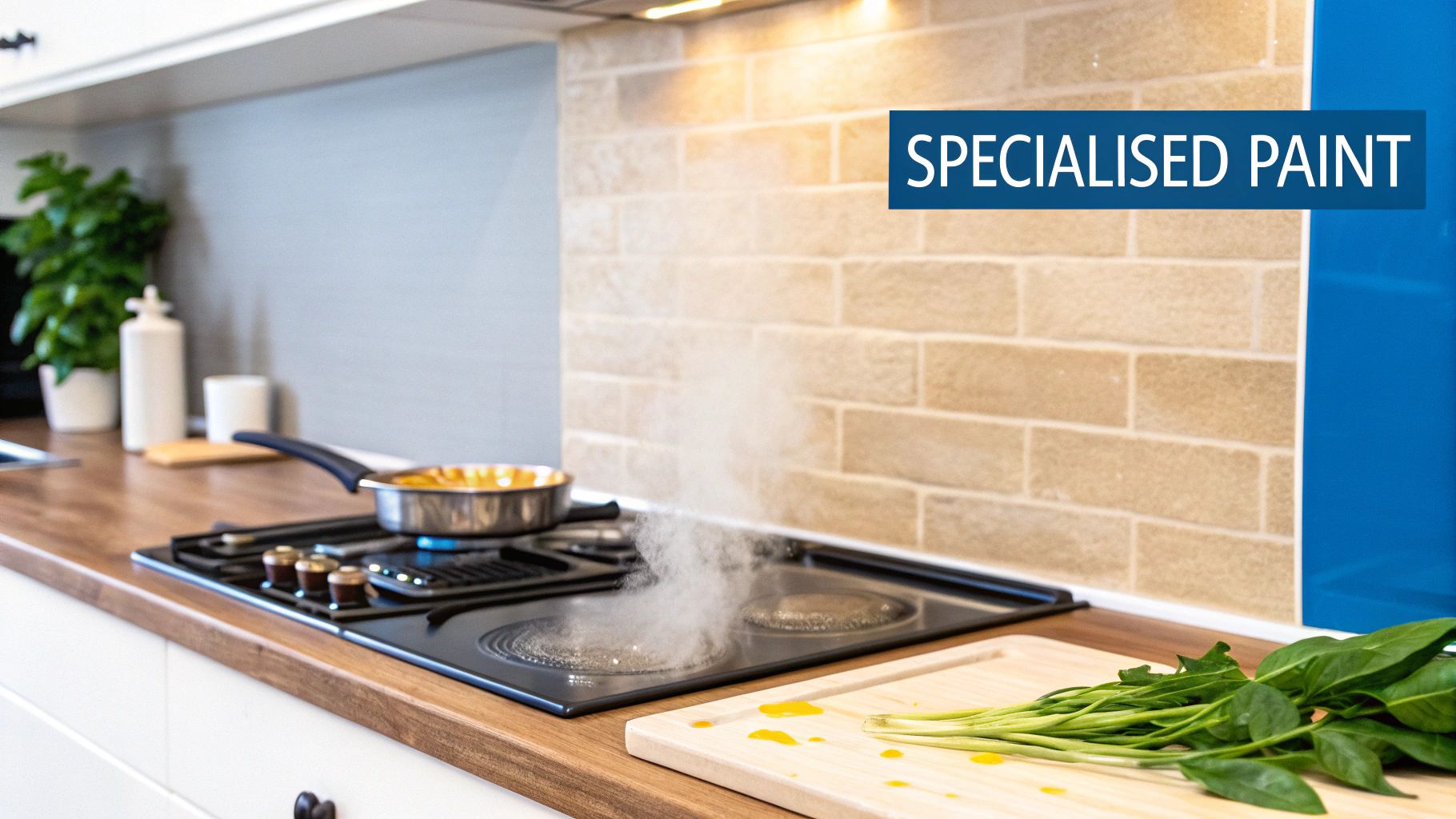
Your kitchen isn’t just another room; it's the heart of the home and a high-performance workspace. Using a standard emulsion in here is like wearing suede shoes in the rain—it simply won’t hold up against the constant assault of moisture and daily life. That's why picking a purpose-built paint is a critical investment in your home's look and longevity.
Think of it as choosing the right tool for the job. A dedicated kitchen paint is formulated to thrive in these demanding conditions. These paints are packed with special binders and additives that create a tough, non-porous film on your walls.
This protective barrier offers a few key advantages:
The move towards more durable and user-friendly products is clear in the UK paints and coatings market. Waterborne coatings have become the dominant force, capturing a 44.14% revenue share. This popularity makes perfect sense for busy London kitchens, where the low-odour, quick-drying formulas supplied by Neasden Hardware are ideal for homes that can't afford long downtime. You can discover more about these market trends and their impact online.
In essence, choosing a specialised kitchen paint isn't just about how it looks; it's a practical decision that saves you time on cleaning and money on future redecorations. By investing in the right product from the start, you ensure a finish that is both beautiful and built to last.
Choosing the right paint for kitchen areas is about more than just colour—the finish, or sheen, is just as important. A paint's finish doesn't just dictate how it looks on the wall; it also determines its toughness and how well it stands up to daily scrubbing and cleaning. Think of the finish as the paint's built-in armour. The higher the sheen, the stronger the defence.
Getting to grips with the spectrum from matt to gloss is key. It allows you to match the right level of durability to each surface in your kitchen, ensuring a flawless, practical, and long-lasting result that looks intentional and performs brilliantly under pressure.
Matt paint used to be reserved for low-traffic spots like bedrooms, but it's come a long way. Today’s durable matt emulsions are specially formulated for high-humidity environments like kitchens. They give you that chic, non-reflective, velvety finish that’s brilliant at hiding minor bumps and scrapes on large wall areas.
Unlike the old matt paints, these advanced formulas are properly scrubbable and stain-resistant. That means you can wipe away splashes and marks without leaving behind a shiny, polished patch—a frustrating problem known as "burnishing." For kitchen walls where you want a contemporary, flat look without giving up on cleanability, durable matt is the perfect choice.
A durable matt finish marries modern aesthetics with real-world performance. It delivers the sophisticated, low-sheen look popular in today's designs while offering the washability that is non-negotiable in a kitchen.
When it comes to high-touch surfaces, eggshell and satin finishes are the undisputed champions. These mid-sheen options hit that sweet spot between a subtle lustre and exceptional resilience, making them the go-to paint for kitchen cabinets, doors, and wooden trim.
For surfaces that need maximum protection, silk and gloss finishes are your best allies. Their higher sheen levels create a highly reflective, almost plastic-like surface that is incredibly tough and ridiculously simple to clean.
While a full gloss might be a bit much for entire walls, it’s an excellent choice for door frames, window sills, and skirting boards. Its superior wipeability means these high-impact areas can be cleaned effortlessly. Silk emulsion is the wall equivalent, offering a mid-to-high sheen that bounces light around the room and is very durable, though its reflectiveness can highlight any imperfections on the surface.
Not every surface in your kitchen plays by the same rules. A ceiling that deals with constant steam needs a different paint than a hard-working cabinet door, and a splashback is in the line of fire far more than the skirting boards. To get a professional finish that actually lasts, you need a smart strategy for each part of your kitchen. Choosing the right paint for kitchen surfaces is half the battle.
Think of this as your playbook for a flawless, durable result. By giving each area the specific attention it needs, you're making sure your new kitchen doesn't just look fantastic on day one, but stays that way through all the chaos of daily life.
Kitchen walls and ceilings are on the front line, constantly battling steam, airborne grease, and swinging temperatures. Slap on a standard emulsion, and you’ll soon see it struggle, soaking up moisture and becoming a nightmare to clean. For these big, exposed areas, you need something tougher.
Look for a moisture- and grease-resistant emulsion. The new generation of durable matt finishes are a brilliant choice. They give you that modern, flat look but are completely scrubbable. Another great option is an eggshell or soft sheen finish, which has a slight lustre that’s incredibly resilient and easy to wipe down – perfect for the walls right behind your hob and sink.
Your kitchen cabinets, doors, and trim are the high-contact zones. They get opened, closed, bumped, and wiped down constantly, so they need a paint that can take a beating without chipping or scuffing. For these areas, meticulous prep and the right type of paint are non-negotiable.
For wooden cabinets, you can’t go wrong with a tough oil-based or a modern, hard-wearing water-based enamel. An eggshell or satin finish is ideal, as these cure to a really robust, durable film. When you're planning a cabinet refresh, knowing which products to trust is key. You can find some great insights on the best paint for cabinet painting to help you decide. And for more general tips, don't forget to check out our detailed guide on choosing the best paint for interior wood.
This quick guide breaks down which finish works best for each main kitchen surface.
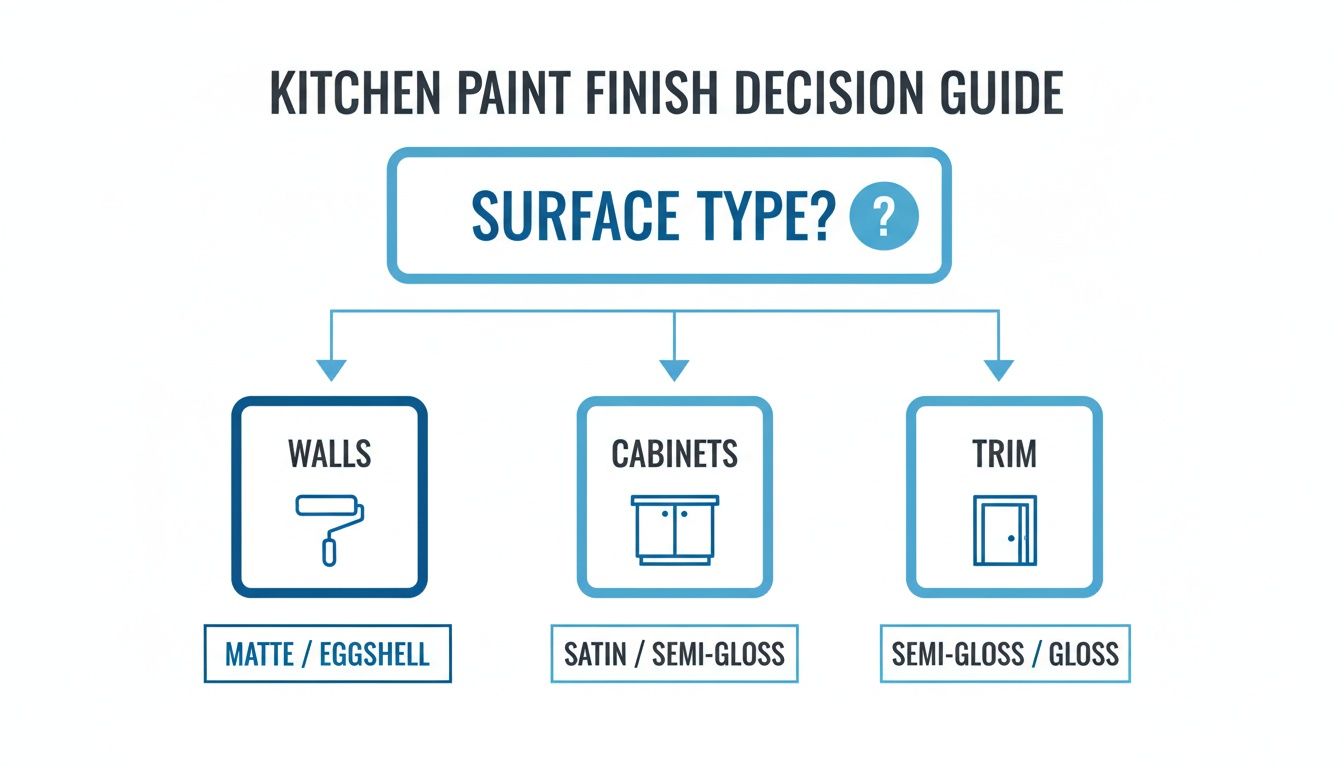
As you can see, the function of the surface really dictates the ideal paint finish, from durable emulsions for walls to tougher coatings for cabinets and trim that see a lot more action.
Choosing the right paint is a big deal in the UK's architectural coatings market, which is set to hit £2.29 billion. Kitchens and other home projects make up a massive 85.37% of that market value. In these high-traffic spots, acrylic paints are the clear favourite, holding a 56.99% share because they dry fast and have low odour, making them perfect for cabinets and walls.
Ripping out and replacing tiles is expensive, messy, and time-consuming. Luckily, painting over your existing tiles is a fantastic, budget-friendly way to give a tired splashback a new lease of life.
The key here is to use a specialist tile paint or a multi-surface paint. These products are formulated to stick like glue to glossy, non-porous surfaces like ceramic. The result is a waterproof, wipeable finish that looks just like a brand-new set of tiles, without any of the hassle.
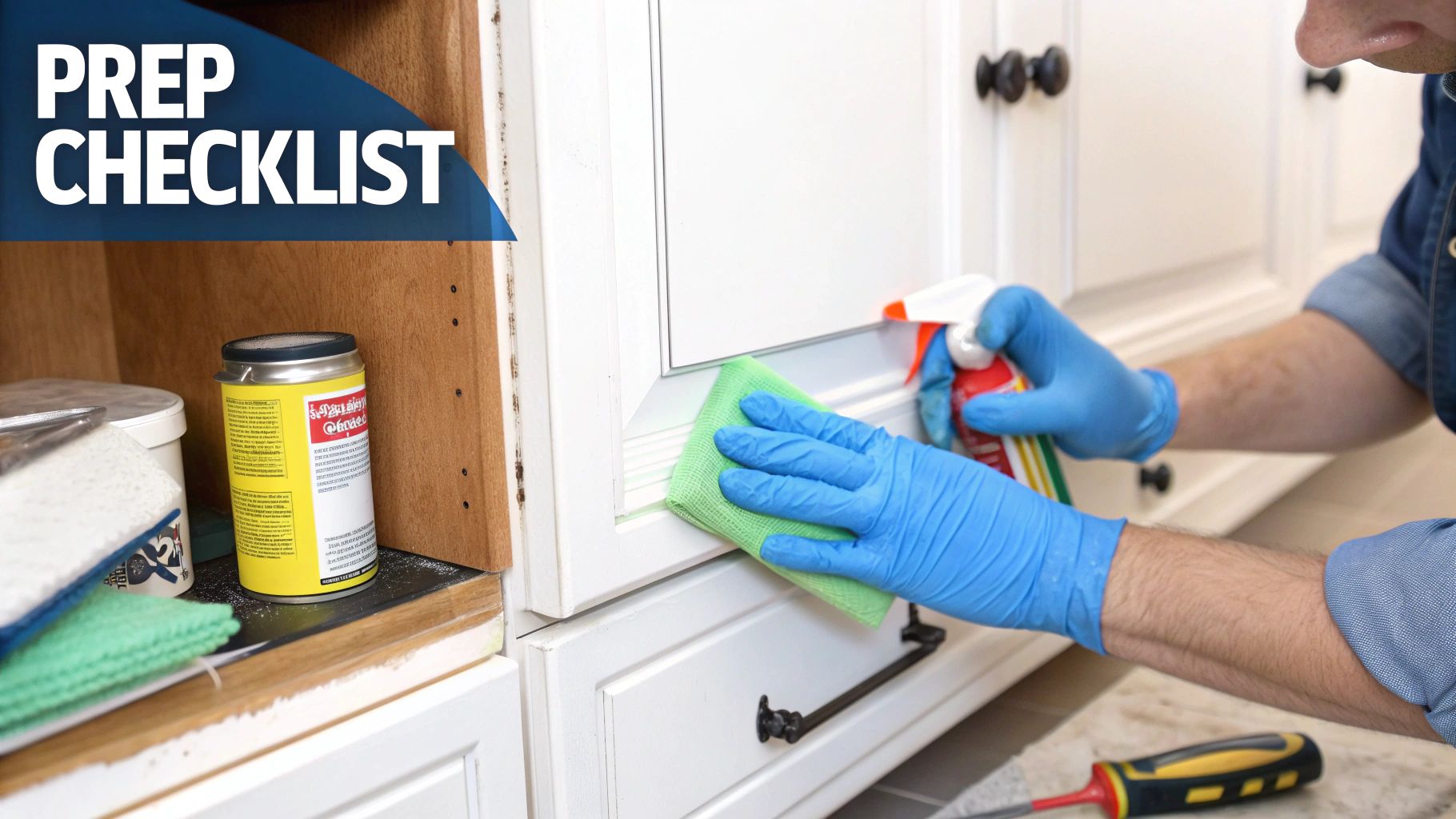
The secret to a paint job that looks flawless and lasts for years isn't found in the brushwork of the final coat. It’s forged in the often-overlooked preparation stage.
Skipping these foundational steps is like building a house on sand—the results simply won't last, especially in a demanding environment like a kitchen. Proper prep is the difference between a project you’re proud of and one you’ll have to redo in a year, ensuring your new paint for kitchen surfaces sticks properly for a smooth, durable finish that resists chipping and peeling.
Before you even think about picking up sandpaper or a paintbrush, every single surface needs a thorough clean. Kitchens are absolute magnets for airborne grease, grime, and food residue, all of which create an invisible barrier that stops paint from sticking.
Using a good quality sugar soap or a specialised degreasing cleaner isn't just a suggestion; it's non-negotiable. Scrub down all your walls, cabinets, and trim, paying extra attention to the areas around the hob and sink. A clean, grease-free surface is the absolute cornerstone of a successful paint job.
Once your surfaces are sparkling clean and completely dry, it's time to deal with any imperfections. Grab a quality filler and patch up any cracks, dents, or old screw holes. This is what ensures your final paint finish will be beautifully smooth and professional.
Sanding is the next critical stage. You aren't trying to strip the surface back completely; instead, you’re aiming to gently scuff it. This process, known as 'keying', creates a fine-textured surface that gives the new paint something to grip onto. It dramatically improves adhesion, especially on older, glossier finishes.
For more detailed advice on getting wood ready, you can learn how to prep wood for painting in our dedicated guide.
Good preparation is becoming even more crucial. Amid a recovering UK painting sector valued at £3.5bn, demand for kitchen renovations is surging, with new housing starts jumping 31.7% year-on-year. This has increased opportunities for interior finishing, making proper prep techniques vital for durable, high-quality results. You can find out more by exploring insights on the UK painting industry.
Think of primer as the essential bridge between the old surface and the new paint. It’s a specialist undercoat that solves a multitude of problems, making sure your topcoat looks its absolute best.
A quality primer is your best friend for several reasons:
By mastering these foundational techniques, you’ll avoid the common pitfalls of kitchen painting and guarantee a beautiful, resilient result that stands the test of time.
Colour has the power to completely redefine your kitchen's atmosphere, making it feel larger, brighter, and more inviting. But choosing a palette isn’t about chasing fleeting trends; it’s about creating a cohesive scheme that feels timeless and personal to you. A well-thought-out palette can turn the heart of your home into a stylish, functional space you'll love for years.
The process always begins by working with what you've already got. Take a good look at the fixed elements in your kitchen that aren't changing—things like your worktops, flooring, and appliances. These features have their own undertones (warm, cool, or neutral), and your new paint for kitchen walls and cabinets should harmonise with them, not fight against them.
For example, a worktop with cool, grey veining will naturally pair well with blues, greens, or crisp whites. On the flip side, a floor with warm, honey-coloured wood tones will be beautifully complemented by creamy off-whites, earthy greens, or rich, warm greys. Building your palette around these existing elements is the secret to a unified and intentional look.
Colour has a profound psychological impact, and you can use this to your advantage to create the exact mood you want in your kitchen. It’s all about deciding how you want the space to feel.
Your kitchen's lighting—both natural and artificial—will dramatically alter how colours appear. A shade that looks like a perfect soft grey in the shop can suddenly reveal unwanted lilac or green undertones under your kitchen's LED spotlights.
This is precisely why using tester pots is a non-negotiable step. Don't skip it. Paint large swatches on different walls and check on them at various times of the day and night. You need to see how they interact with your specific lighting conditions before you commit.
Once you've got the basics down, learning how to choose kitchen cabinet colors like an expert can truly elevate your kitchen's final look. This practical approach, combined with thoughtful testing, ensures you can pick a colour scheme with total confidence.
Choosing the right paint for kitchen surfaces is only half the battle; getting the project done right depends on having the best supplies. For over three decades, Neasden Hardware has been the go-to partner for London's professional tradespeople and keen DIYers, stocking everything you need for a flawless finish.
We do more than just sell paint. Our team hand-picks a selection of high-performance products from leading brands, so you know you're getting the durability and quality your kitchen deserves. We understand that a brilliant decorating project is built on more than just the topcoat.
At our Wembley store and online, you’ll find a comprehensive range of decorating essentials. That means everything from specialised primers and fillers to high-quality brushes, rollers, and masking tapes. We believe in providing the complete solution, which is why we also stock a wide selection of cabinet hardware from trusted names like Hettich, perfect for adding those final touches.
For tricky surfaces or tough stains, a reliable primer is an absolute must. You can learn more about our high-adhesion primers, such as the ever-popular Zinsser B-I-N Primer Sealer, which is ideal for creating the perfect base on glossy cabinets or blocking out stubborn marks for good.
Shopping with us means you get more than just great products. We're committed to making your project a success from the moment you start planning.
Choosing Neasden Hardware means you're partnering with a team that has the experience and the stock to bring your vision to life. We provide the tools, the paint, and the expertise to help you create a kitchen that's not only beautiful but built to last.
When you’re planning a kitchen paint job, a few questions always seem to pop up. To help you get your project started on the right foot, we’ve put together answers to some of the most common queries we hear from our customers.
For kitchen walls, you really can't go wrong with a durable matt or an eggshell finish. Modern durable matt emulsions have come a long way; they’re specially made to be washable and scrub-resistant, giving you that flat, contemporary look without compromising on toughness.
Eggshell is another brilliant choice. It has a subtle, low sheen that’s incredibly hard-wearing and a breeze to clean. This makes it perfect for those high-traffic spots and walls that get a lot of splashes and steam, especially around the cooker and sink.
Yes, absolutely. Priming is a step you should never, ever skip when painting kitchen cabinets. A good quality primer does three critical jobs: it stops any stains from bleeding through, makes sure your final paint colour looks true and rich, and most importantly, it creates a rock-solid bond between the surface and the topcoat.
This grip is especially vital for tricky surfaces like laminate or old gloss paint, ensuring your hard work doesn't start chipping or peeling away. Think of it as the foundation for a professional, long-lasting finish.
This is a great question. While most modern water-based paints feel touch-dry in just a few hours, they need a lot longer to fully ‘cure’. It’s best to wait at least two weeks—and ideally up to 30 days—before you give the newly painted surfaces a proper scrub.
During this curing time, the paint is chemically hardening to reach its maximum strength and washability. Gentle cleaning with a soft, damp cloth is fine after a few days, but hold off on any harsh chemicals or abrasive sponges until the paint has fully cured.
Ready to get started on your kitchen transformation? You can find a full range of high-performance paints, primers, and all the decorating supplies you'll need at Neasden Hardware. Shop our decorating collection today for quality products and expert advice.